


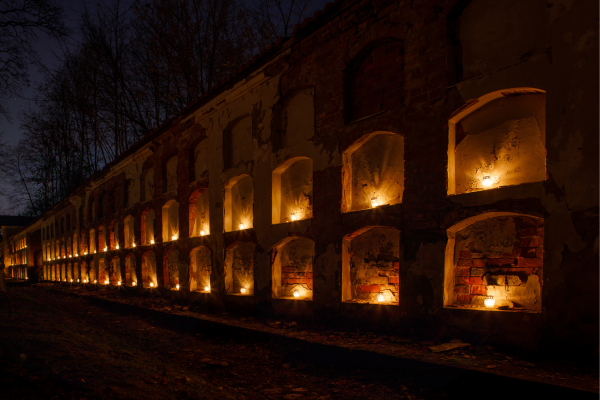
Echoes of Ancient Rome
To understand the soul of the columbarium, we must travel back two thousand years. The name itself, derived from the Latin word columba (dove), originally described dovecotes. Ancient Romans, observing these structures, found in their design a sense of peace and order, which they decided to translate into the sphere of the sacrum.
The first columbaria were underground chambers where rows of niches held the ashes of loved ones. These were not, however, places of gloom or austerity. The walls of Roman columbaria, such as the famous Columbarium of Pomponius Hylas, were covered with vibrant frescoes, intricate mosaics, and inscriptions that told of the lives, passions, and loves of the deceased. Even then, it was believed that the memory of a person does not have to be as heavy as stone - it can be luminous and light.
The Aesthetics of Order and Community
Today, the columbarium is returning to favor in a form that blends this ancient tradition with modern minimalism. It is an option for those who, in the face of loss, seek solace in order and simplicity.
Instead of elaborate monuments, we are presented with a vertical plane of stone. It is a place that does not dominate the landscape but integrates into it with respect. For many, the sight of niches arranged side by side evokes a reflection on a community of fate - the idea that, ultimately, we all become part of one great, shared story.
A Different Perspective on Closeness
Choosing a columbarium often involves a shift in how we nurture memory. Without a traditional mound of earth, without the need to move heavy stone slabs, the visitor's attention shifts toward the detail. A flower tucked into a small holder, a lit candle on a shelf, a plaque with a name - these modest gestures take on a special power.
There is a certain relief in this form of burial. It allows one to focus on the spiritual dimension of the visit, on a quiet conversation with a memory, rather than on the burdens of maintaining a gravesite. It is a space that invites one to be "here and now," in a silence that does not overwhelm, but rather embraces.
Reflection Over Choice
Is the columbarium a path for everyone? Perhaps not. Traditional earth burials have deep roots in our culture and, for many, remains the only appropriate resting place. However, the columbarium is a quiet voice in this discussion - an invitation for those who seek lightness in architecture and, in memory, a peace devoid of the weight of matter.
Choosing a resting place is one of life’s most personal decisions. It is good to know that tradition offers us different languages with which we can tell the story of our love for those who have departed.